
Electrostatic Attraction
Movie - a solid
 Play movie (1 minute 6 seconds, 3.9 MB)

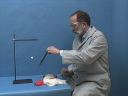
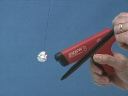

A bakelite rod is rubbed with fur and brought close to a light sphere that is covered with aluminum foil. The sphere at first is attracted toward the rod. After it has touched the rod, the sphere is repelled. A device that generates ions in the air is brought near the rod and this causes the repulsion to stop. Next a glass rod is rubbed with a piece of silk. When this is brought near the sphere, the sphere is at first attracted, but after it touches the rod, it is repelled away. Now the ball is left to hang by itself and the bakelite rod is rubbed with fur and brought close to the ball again. The ball is now strongly attracted toward the bakelite rod and it continues to be attracted toward the rod until the device to remove electric charges is used.
(40)
Liquids
 Play movie (30 seconds, 1.7 MB)
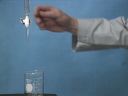
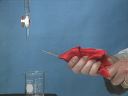
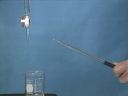
Liquid is contained in a burette and allowed to flow down into a beaker in a thin stream. When the bakelite rod is rubbed with fur and brought near the stream of liquid the stream is attracted toward the rod and deflected from its straight downward path. The same thing happens when a glass rod rubbed with silk is brought near the stream of liquid; the stream of liquid is deflected toward the rod.
(42)
Distilled Water
 Play movie (12 seconds, .8 MB)
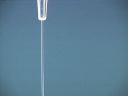
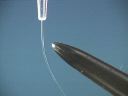
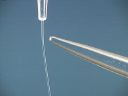
A stream of distilled water is attracted to either rod. Polar water molecules stabilize the charge induced on the stream of liquid, and cause the stream to be attracted to the rod.
(40)
Molecule of water
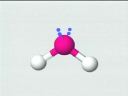
(42)
Rotating molecule of Water
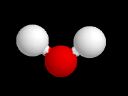
(77)
Ethanol
 Play movie (15 seconds, 1.1 MB)
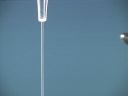
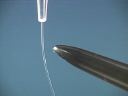
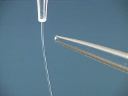
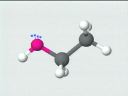
A stream of Ethanol is attracted to either rod. Polar Ethanol molecules stabilize the charge induced on the stream of liquid, and cause the stream to be attracted to the rod.
(40)
Molecule of ethanol
(42)
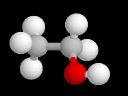
Rotating molecule of ethanol
(77)
Acetone
 Play movie (12 seconds, .9 MB)
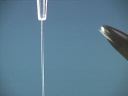
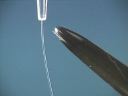
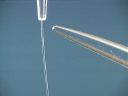
A stream of Acetone is attracted to either rod. Polar Acetone molecules stabilize the charge induced on the stream of liquid, and cause the stream to be attracted to the rod.
(40)
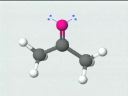
Molecule of acetone
(42)
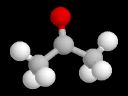
Rotating molecule of acetone
(77)
Dichloromethane
 Play movie (15 seconds, .9 MB)
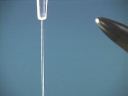
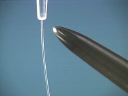
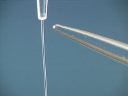
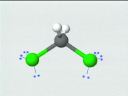
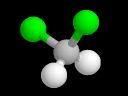
A stream of Dichloromethane is attracted to either rod. Polar Dichloromethane molecules stabilize the charge induced on the stream of liquid, and cause the stream to be attracted to the rod.
(40)
Molecule of dichloromethane
(42)
Rotating molecule of dichloromethane
(77)
Tetrachloromethane
 Play movie (15 seconds, 1.2 MB)
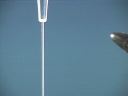
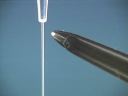
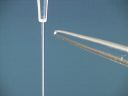
A stream of non polar Tetrachloromethane is NOT attracted to either rod, because there are no polar molecules in the stream of liquid to stabilize an induced charge.
(40)
Animation of rotating molecular model
 Play movie (14 seconds, .9 MB)
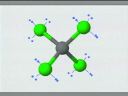
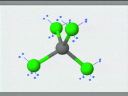
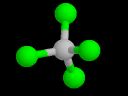
The molecular structure of tetrachloromethane is tetrahedral; even though the bonds are polar, their polarity is canceled by the symmetry of the molecular structure.
(42)
Rotating molecule of tetrachloromethane
(77)
Hexane
 Play movie (10 seconds, .8 MB)
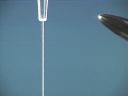
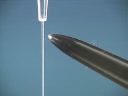
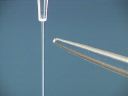
A stream of nearly nonpolar Hexane is NOT attracted to either rod, because there are no polar molecules in the stream of liquid to stabilize an induced charge.
(40)
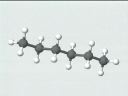
Molecule of hexane
(42)
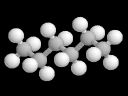
Rotating molecule of hexane
(77)
Toluene
 Play movie (15 seconds, 1.2 MB)
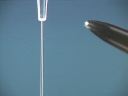
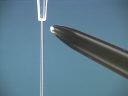
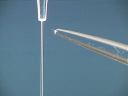
A stream of nearly non polar Toluene is NOT attracted to either rod, because there are no polar molecules in the stream of liquid to stabilize an induced charge.
(40)
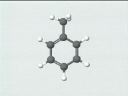
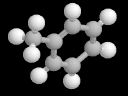
Molecular model of toluene
(42)
Rotating molecule of toluene
(77)
© 1997 Division of Chemical Education, Inc., American Chemical Society. All rights reserved.