
Electrolysis of Aqueous Solutions
Introductory pictures
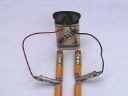
Still of apparatus
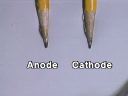
Still showing anode and cathode
(33)
HCl
 Play movie (8 seconds, .5 MB)
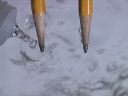
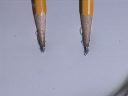
Electrolysis of a hydrochloric acid solution produces oxygen at the anode and hydrogen at the cathode.
(33)
Test with Acid-Base Indicator Video
 Play movie (10 seconds, .7 MB)
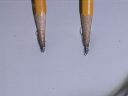

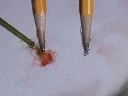
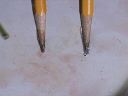
In aqueous hydrochloric acid, the electrolyzed solution is acidic at both electrodes.
(33)
Half-reaction at the Anode, Cathode
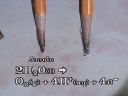
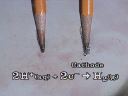
NaOH
 Play movie (8 seconds, .5 MB)

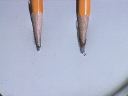
Electrolysis of a sodium hydroxide solution produces oxygen at the anode and hydrogen at the cathode.
(33)
Test with Acid-Base Indicator Video
 Play movie (7 seconds, .6 MB)


In aqueous sodium hydroxide, the electrolyzed solution is basic at both electrodes.
Half-reaction at the Anode, Cathode
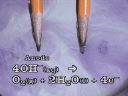
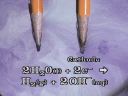
NaCl
 Play movie (8 seconds, .5 MB)

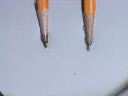
Electrolysis of a sodium chloride solution produces oxygen at the anode and hydrogen at the cathode.
(33)
Test with Acid-Base Indicator Video
 Play movie (8 seconds, .5 MB)


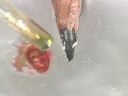

In neutral sodium chloride, base is produced at the cathode and acid at the anode.
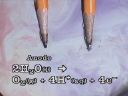
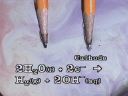
Half-reaction at the Anode, Cathode
© 1997 Division of Chemical Education, Inc., American Chemical Society. All rights reserved.