
Thermite Reaction
A diagram shows the layers of solids within a ceramic pot prior to this reaction. Glycerin is added to potassium permanganate at the top of a ceramic pot containing aluminum metal and iron oxide. When ignited by the glycerin/permanganate reaction, the aluminum/iron oxide mixture reacts vigorously and spectacularly, producing molten iron and aluminum oxide. The equation for the reaction is given.
(30 )
Keywords
aluminum, applications - practical/real-life, descriptive chemistry, enthalpy/heat, evidence of chemical reaction, exothermic process, fire/flammability, iron, metals, oxides, redox reaction, single exchange/replacement reaction, strong reducing agent
Multimedia
Chart showing layers in the flowerpot
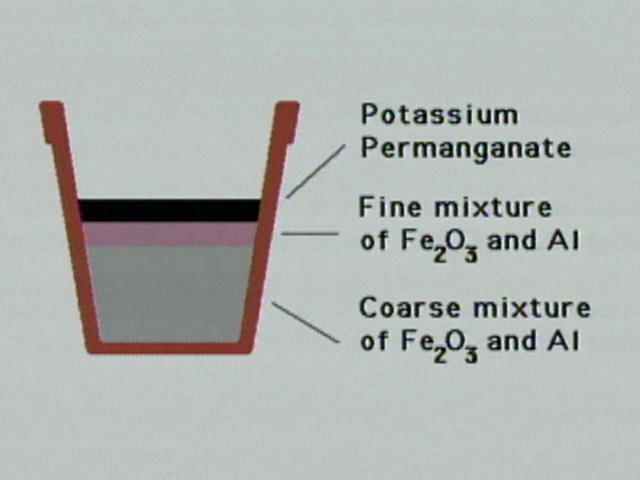 |
 Play movie
(QuickTime 3.0 Sorenson, duration 62 seconds, size 4.2 MB)
Play movie
(QuickTime 3.0 Sorenson, duration 62 seconds, size 4.2 MB)
The thermite reaction involves a mixture of iron oxide and aluminum that has been placed in a flower pot and covered with potassium permanganate. Some glycerin is poured over the potassium permanganate and eventually begins to react. When the iron oxide-aluminum mixture is ignited, a very vigorous reaction occurs and a molten metal can be seen dropping from the flower pot into a bucket of sand below. The reaction is extremely exothermic, a great deal of heat is given off. When the product of the reaction is examined a large piece of white hot iron has fallen into the sand at the bottom of the apparatus. This illustrates that aluminum is an extremely strong reducing agent and also that this reaction is very highly exothermic.
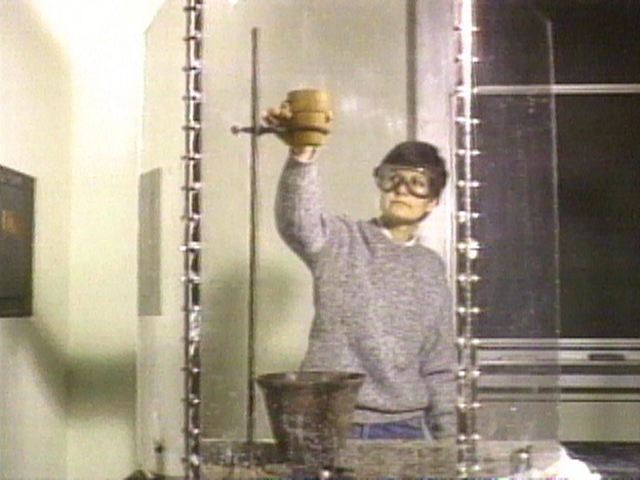 The flower pot is positioned. |
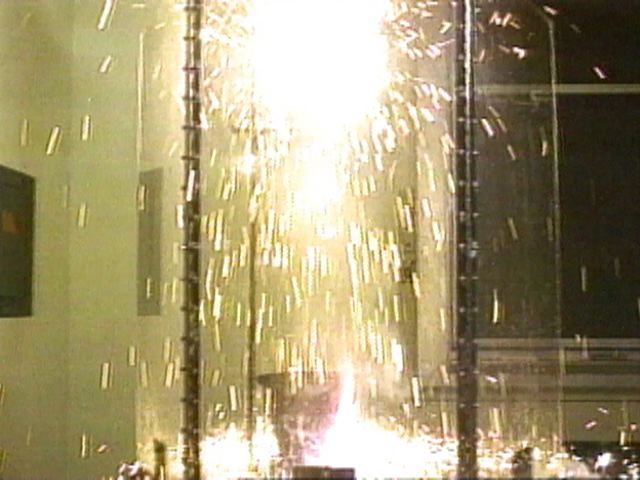 An extremely exothermic reaction occurs. |
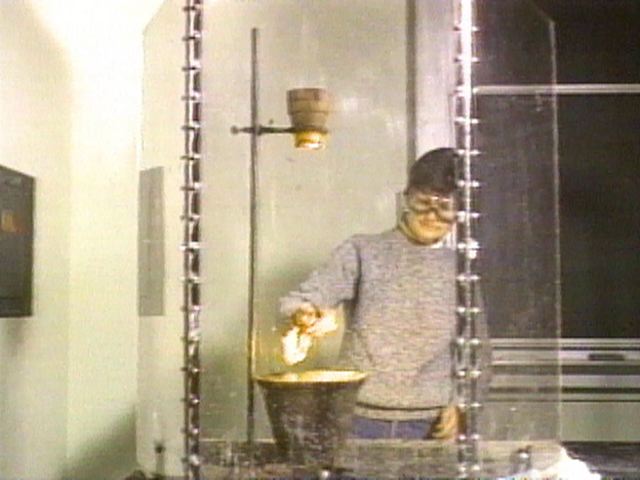 A piece of white hot iron. |
Additional still images for this movie
Discussion
Equation
Fe2O3 + 2Al --> Al2O3 + 2Fe
Demonstration Notes, Warnings, Safety Information, etc.
Exam and Quiz Questions
1. Is this an endothermic or an exothermic reaction? Support your answer.
2. What observable evidence indicates that a chemical reaction is taking place?