
Metal/Iodine Reactions and Cells
When solid zinc or aluminum is mixed with solid iodine, no reaction is observed. When a few drops of water are added, the metal and iodine react vigorously.
An electrochemical cell with zinc metal dipping in zinc sulfate and a graphite electrode dipping in a porous cup containing iodine and aqueous potassium iodide is assembled. When the porous cup is placed in the zinc sulfate solution and the electrodes are connected to a motor, the motor turns the hand on a clock. When the zinc/zinc sulfate half-cell is replaced with aluminum/aluminum sulfate, the motor turns slowly. When the oxide coat on the metal is removed by sanding, the motor initially speeds up, but then slows down once again as more oxide builds up.
(37 )
Keywords
aluminum, combination reaction, electrochemical (galvanic) cells, enthalpy/heat, exothermic process, halogens/halides/hydrohalic acids, phase change, redox reaction, surface phenomena
Multimedia
1. Zinc with Iodine
 Play movie
(QuickTime 3.0 Sorenson, duration 27 seconds, size 1.9 MB)
Play movie
(QuickTime 3.0 Sorenson, duration 27 seconds, size 1.9 MB)
When powdered zinc and solid iodine are mixed, no reaction is observed. When water is added to the mixture, the exothermic reaction raises the temperature enough to vaporize iodine.
 Powdered zinc and solid iodine are mixed. |
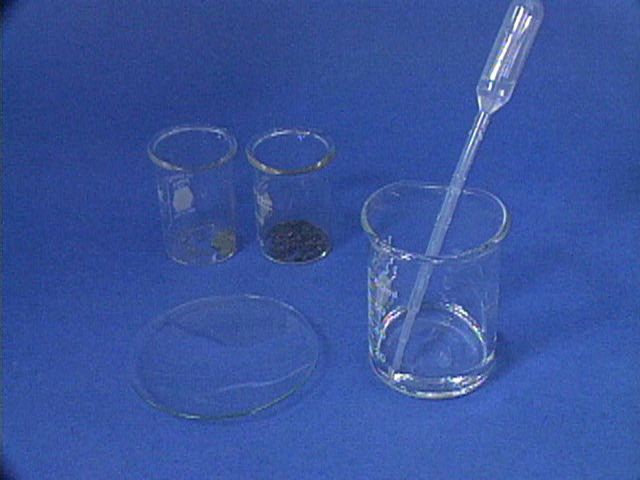 |
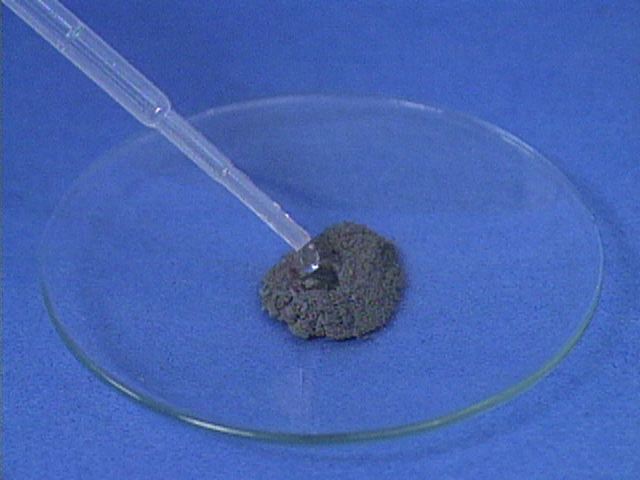 Water is added. |
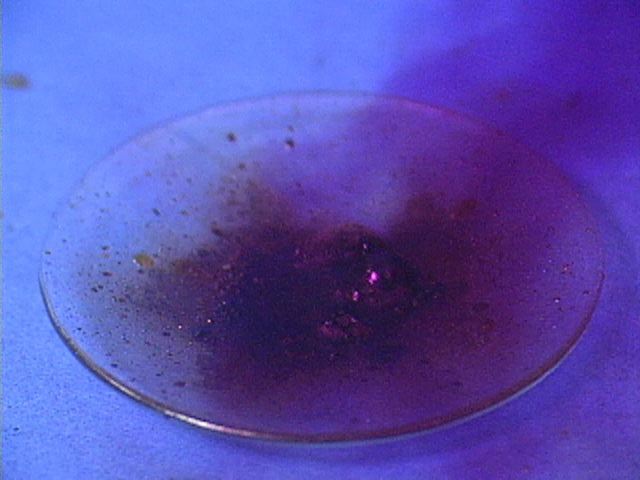 The exothermic reaction vaporizes iodine. |
Additional still images for this movie
2. Aluminum with Iodine
 Play movie
(QuickTime 3.0 Sorenson, duration 53 seconds, size 3.8 MB)
Play movie
(QuickTime 3.0 Sorenson, duration 53 seconds, size 3.8 MB)
When powdered aluminum and solid iodine are mixed, no reaction is observed. When water is added to the mixture, the exothermic reaction raises the temperature enough to vaporize iodine.
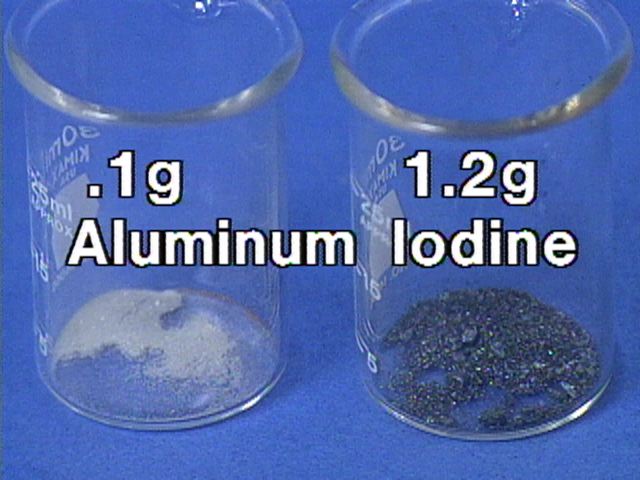 Powdered aluminum and solid iodine are mixed. |
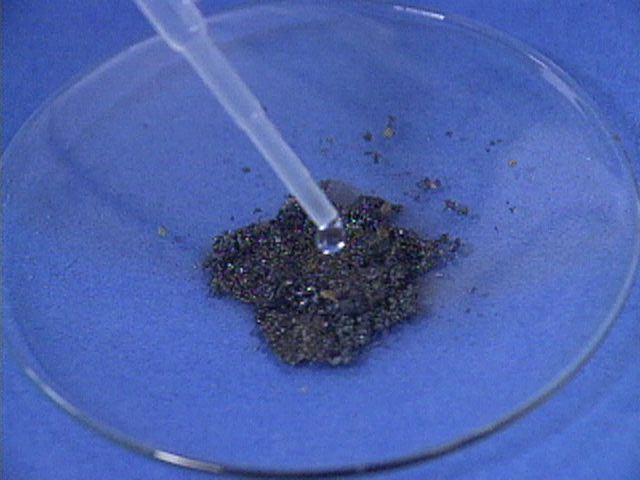 Water is added. |
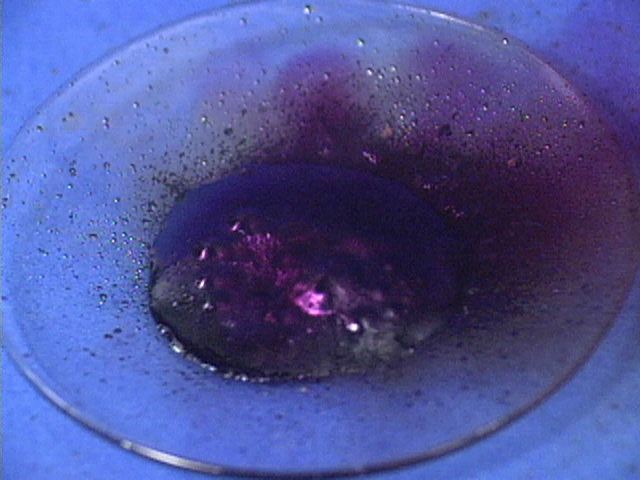 The exothermic reaction raises the temperature enough to vaporize iodine. |
Additional still images for this movie
3. Motor with Zinc
 Play movie
(QuickTime 3.0 Sorenson, duration 41 seconds, size 2.9 MB)
Play movie
(QuickTime 3.0 Sorenson, duration 41 seconds, size 2.9 MB)
A zinc strip is placed in a zinc sulfate solution. Iodine and potassium iodide are mixed in a porous cup. Placing the cup in the zinc solution, putting a graphite electrode connected to a motor in the solution, and connecting the zinc metal to the other side of the motor completes the circuit, allowing electricity to flow and driving the motor.
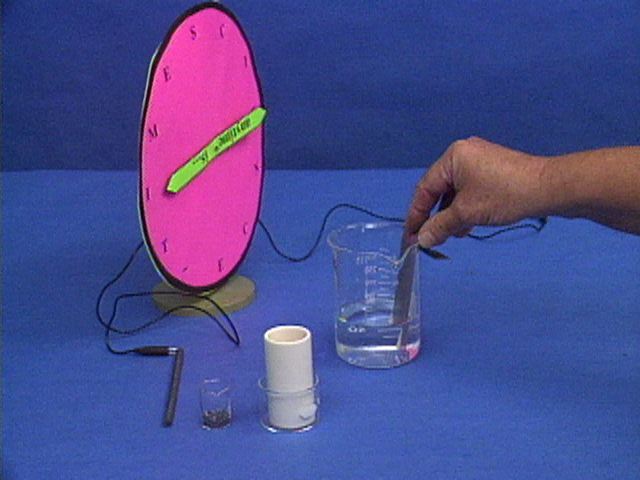 A zinc strip is placed in a zinc sulfate solution. |
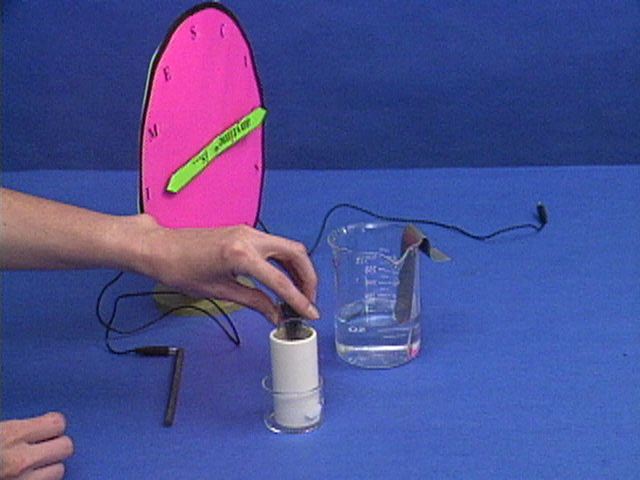 Iodine and potassium iodide are mixed in a porous cup. |
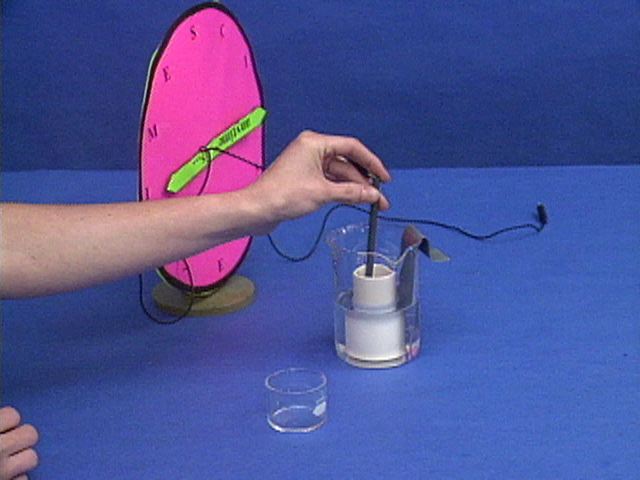 A graphite electrode is placed in the cup. |
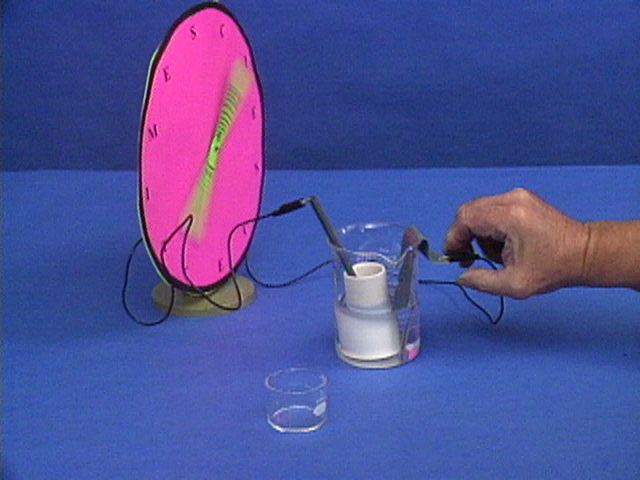 The circuit is completed. |
Additional still images for this movie
4. Motor with Aluminum
 Play movie
(QuickTime 3.0 Sorenson, duration 16 seconds, size 1.1 MB)
Play movie
(QuickTime 3.0 Sorenson, duration 16 seconds, size 1.1 MB)
A similar cell with aluminum replacing zinc turns the motor slowly unless the oxide coating is removed by sanding. The oxide coating quickly reforms on the aluminum, and the motor slows down once again.
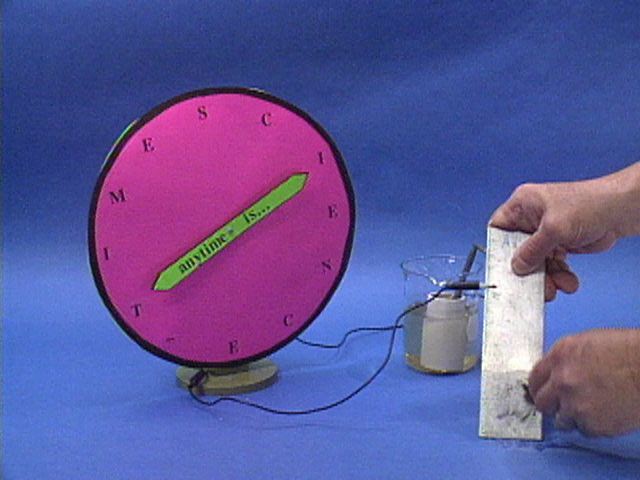 The oxide is removed from the aluminum. |
Additional still images for this movie
Discussion
The speed of the DC motor depends on the voltage generated in the cell. Comparison of the Eos for the reduction of Al3+ and Zn2+ to the metals would suggest that the aluminum-iodine cell will generate a higher voltage than the zinc-iodine cell. However, the presence of a hard, impenetrable oxide coat makes the aluminum less reactive than would be expected. It is this same oxide coat that protects aluminum from the rapid corrosion that is such a problem for metals such as iron.
Demonstration Notes, Warnings, Safety Information, etc.
Exam and Quiz Questions
1. The reduction potentials for Al3+--> Al and Zn2+ --> Zn are -1.68 V and -0.76 V, respectively. Do these potentials correctly predict the relative reactivities of the two metals?
2. What observation might account for the unexpectedly sluggish reaction of aluminum with iodine?