
Reaction of Potassium with Bromine
The protective coating of mineral oil is removed from a piece of potassium metal. The soft metal is easily cut with a metal spatula. A small piece of potassium is carefully added to liquid bromine, producing a violent reaction.
(33 )
Keywords
alkali metals, combination reaction, descriptive chemistry, evidence of chemical reaction, exothermic process, explosive, halogens/halides/hydrohalic acids, ionic compounds - bonding/properties, redox reaction, spontaneous process, strong oxidizing agent, strong reducing agent
Multimedia
 Play movie
(QuickTime 3.0 Sorenson, duration 70 seconds, size 4.9 MB)
Play movie
(QuickTime 3.0 Sorenson, duration 70 seconds, size 4.9 MB)
Because of its high reactivity, potassium metal is stored in mineral oil, a relatively inert liquid. The protective coating of mineral oil must be removed from the metal's surface. The soft potassium will then be cut, and a small piece will be picked up with forceps and carefully added to a small beaker of liquid bromine. The large covered beaker prevents the escape of bromine vapor and reaction products into the environment.
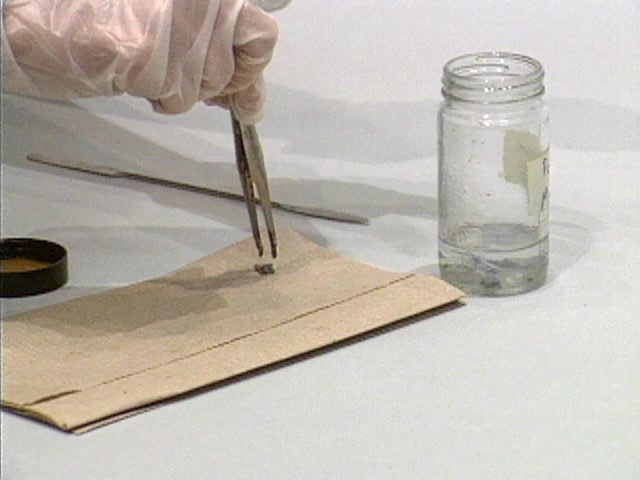 The potassium will be cleaned and cut. |
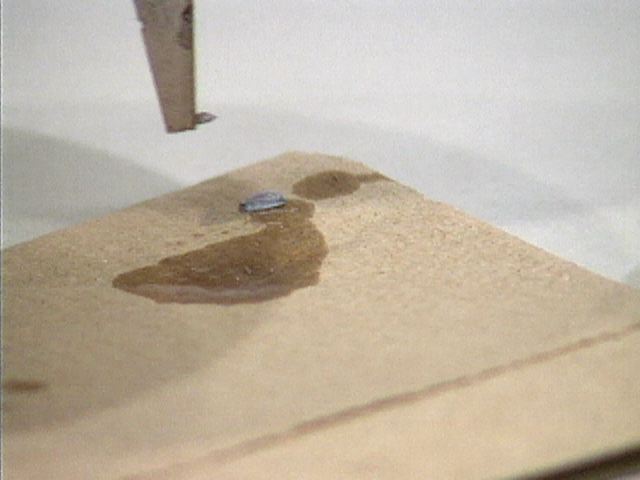 A small piece is picked up with forceps... |
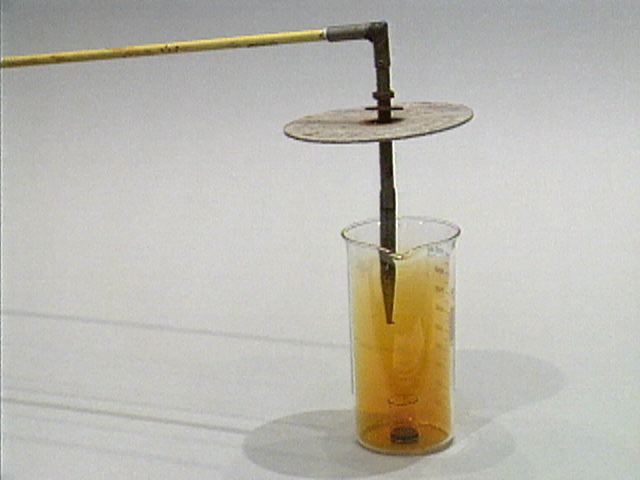 ... and carefully added to a small beaker of liquid bromine. |
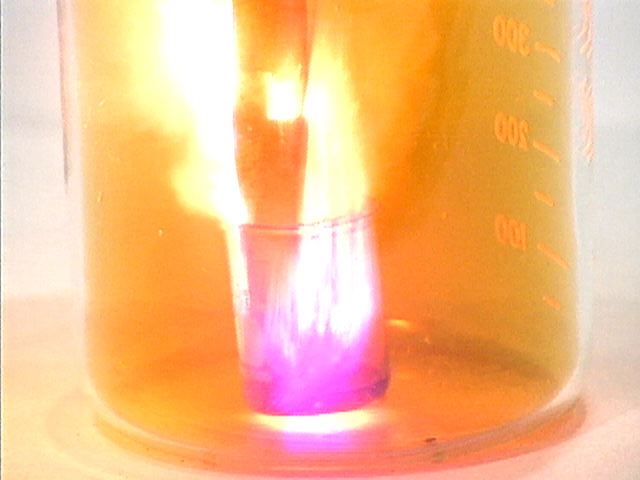 The reaction is vigorous. |
Additional still images for this movie
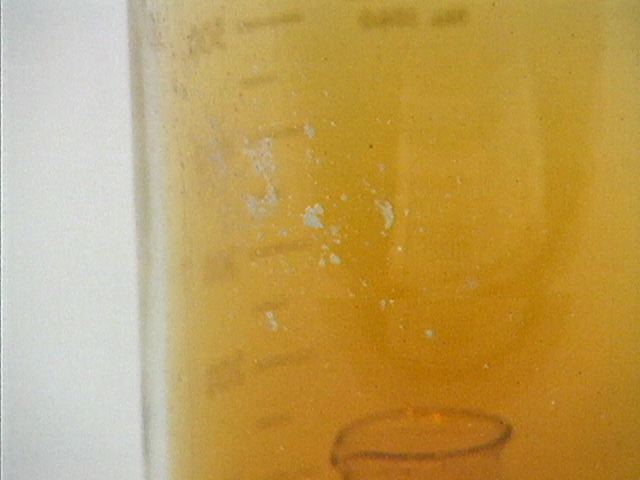 KBr after the reaction. |
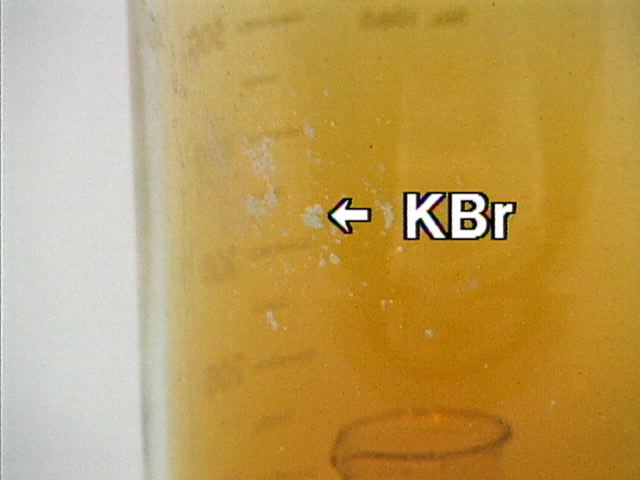 KBr after the reaction - labeled |
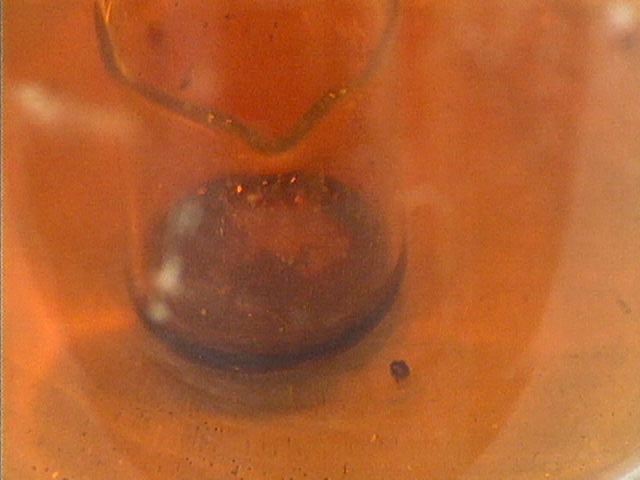 KBr + Br2 after the reaction. |
 KBr + Br2 after the reaction - labeled. |
Discussion
This is a very dangerous reaction, but it provides a nice illustration of what happens when a strong reducing agent and a strong oxidizing agent are brought together. It also illustrates formation of an ionic compound. A great deal of energy can be given off when an electron is transferred from atom that can lose an electron easily to an atom that can gain an electron easily and an ionic crystal lattice is formed.
(166 )
Demonstration Notes, Warnings, Safety Information, etc.
Exam and Quiz Questions
1. What would happen to the potassium if it were not stored in mineral oil?
2. Is the reaction between potassium and bromine endo- or exothermic? Cite evidence from the demonstration to support your answer.