
Chemiluminescence
Luminol and light sticks are demonstrated.
(138 )
Keywords
electromagnetic radiation, energy levels, enthalpy/heat, evidence of chemical reaction, thermochemistry/thermodynamics
Multimedia
Luminol
 Play movie
(QuickTime 3.0 Sorenson, duration 33 seconds, size 2.3 MB)
Play movie
(QuickTime 3.0 Sorenson, duration 33 seconds, size 2.3 MB)
A buffered luminol solution with a copper(II) catalyst is added to the funnel on the left. A hydrogen peroxide solution is added to the funnel on the right. On releasing the rubber tubing the solutions mix. The chemical reaction generates energy which is seen as blue light. This process is chemiluminescence. When the reacting solution mixes with a dye, fluorescein, the light energy from the reaction causes the fluorescein to give off a greenish light in a process called fluorescence.
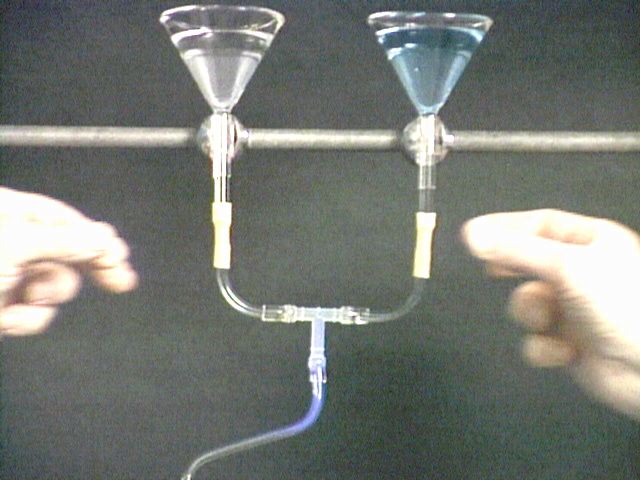 On releasing the rubber tubing the solutions mix. |
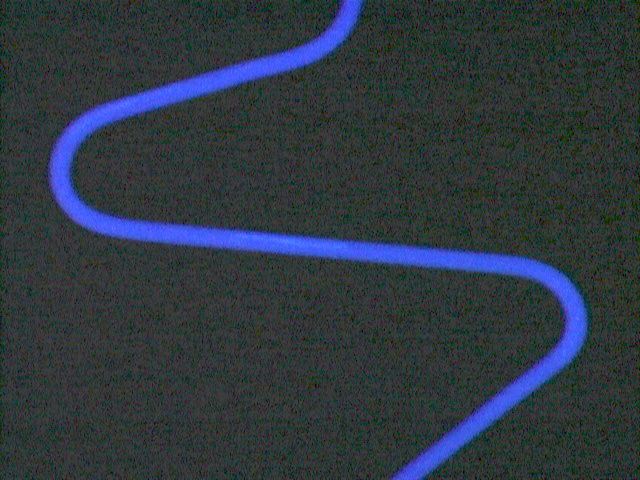 The chemical reaction generates energy which is seen as blue light (chemiluminescence). |
 The reacting solution mixes with fluorescein dye (fluorescence). |
Additional still images for this movie
Light Sticks
 Play movie
(QuickTime 3.0 Sorenson, duration 30 seconds, size 2.3 MB)
Play movie
(QuickTime 3.0 Sorenson, duration 30 seconds, size 2.3 MB)
Commercially available light sticks contain a solution in a glass vial. When the vial is broken, a second solution mixes with the first and light is generated. Different dyes give off different colors when they are caused to fluoresce by the light of the chemiluminescent reaction. Light sticks give off light from 3 to 8 hours, depending on the concentrations of reactants.
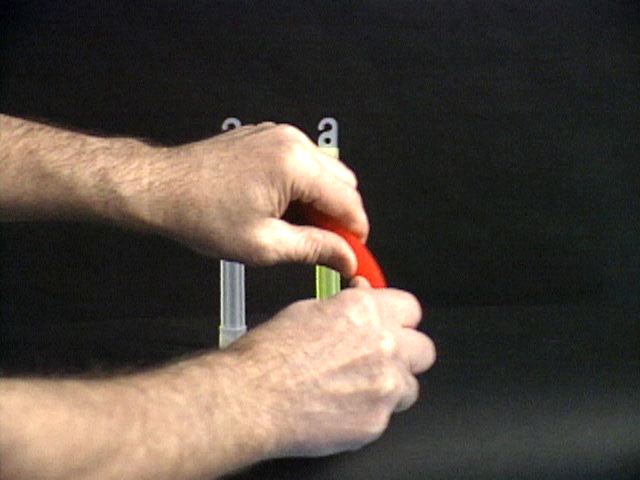 When the vial is broken, a second solution mixes with the first and light is generated. |
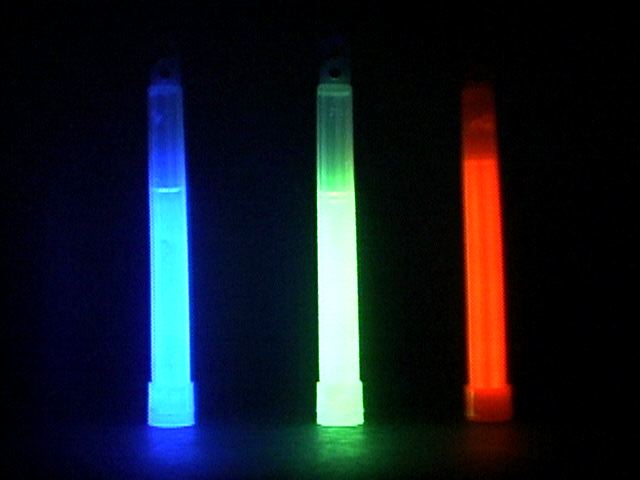 Light sticks give off light from 3 to 8 hours. |
Additional still images for this movie
Discussion
In the luminol demonstration two solutions are mixed. They react, producing blue light. In a light stick one solution is in a flexible plastic tube. The other solution is in a thin-walled glass vial inside the plastic tube. When the glass vial is broken the solutions mix and light is given off. By adding fluorescent dyes and/or changing the color of the plastic tube the color of the light stick can be adjusted.
Demonstration Notes, Warnings, Safety Information, etc.